Seed oils are oils made from seeds, such as sunflower, soy, and cottonseed oils. You may have also heard the term “the hateful eight,” a group of oils that health influencers warn you to avoid. Jennifer Newton, Sky Lakes’ nutrition coordinator, says that list is misleading, too. “They’re not all seed oils,” she notes. “Things like rice bran oil get lumped in, too.”
When people talk about avoiding seed oils, they’re usually casting a pretty wide net.
Why Are Seed Oils So Controversial?
For decades, health experts encouraged people to swap butter and other saturated fats for seed oils to protect their hearts. But lately, that narrative has flipped, with internet influencers claiming seed oils cause inflammation or worse side effects.
One of the biggest concerns you’ll hear is that seed oils are high in omega-6 fatty acids, which some people say trigger inflammation in your body. Newton says the theory sounds reasonable, but the science doesn’t back it up. “When you look at what actually happens in our body, only a very small percentage is converted in that direction,” she explains. “We don’t really see an increase in inflammatory markers when someone is consuming a lot of these plant-based oils.”
The real issue may be where most of us are getting our omega-6s: in ultra-processed foods. Those packaged snacks and convenience foods don’t just contain seed oils; they’re also packed with added sugar, sodium, saturated fat, and a long list of additives. That combination is a much bigger concern than the canola oil sitting in your kitchen cabinet.
Are Some Oils Better Than Others?
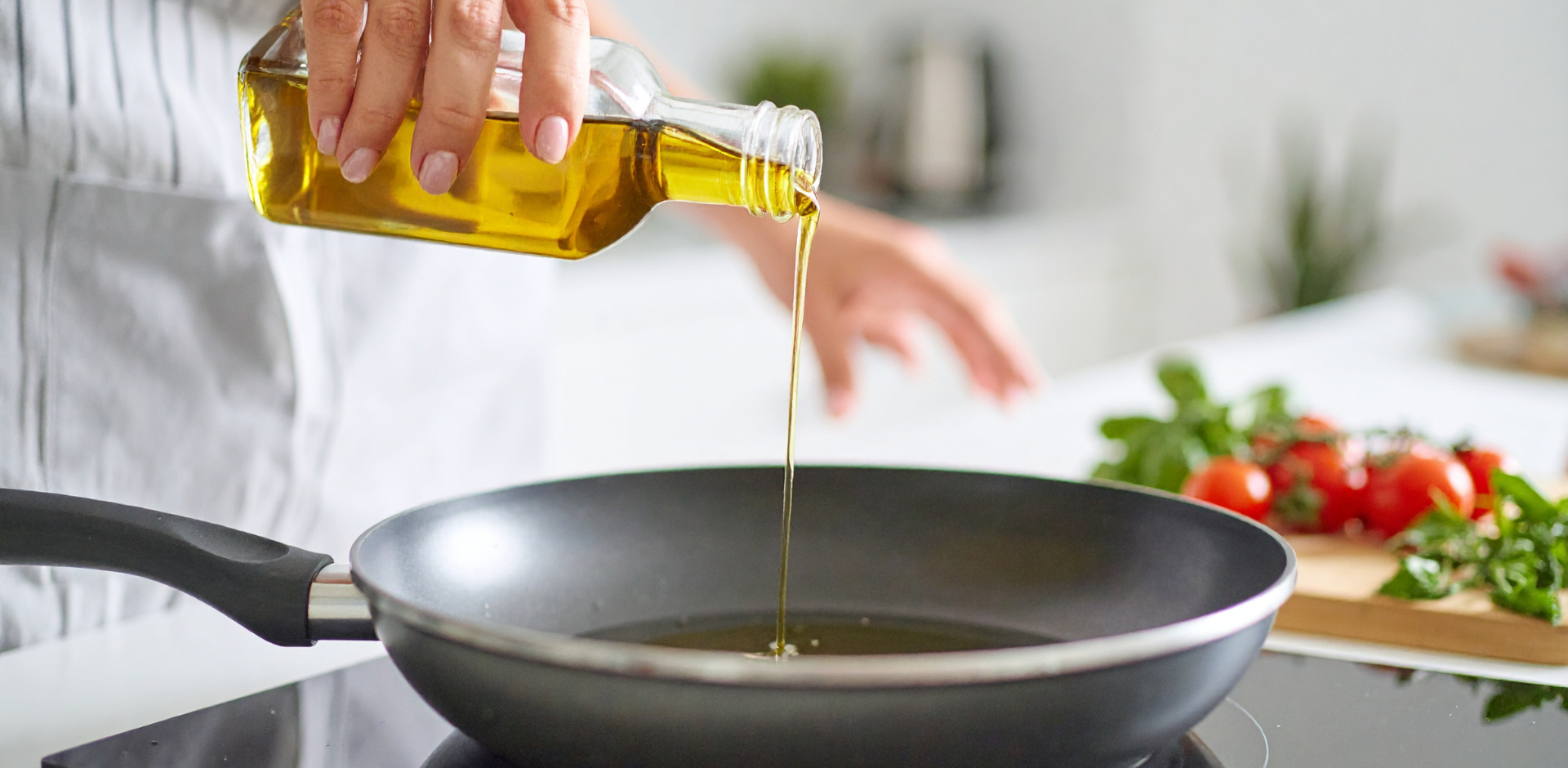
Yes, and Newton has two favorites: olive oil and canola oil. Olive oil is her go-to at home because it’s high in monounsaturated fats and has great flavor for salad dressings and quick sautés. Canola oil is her pick when she needs something neutral-tasting or needs to cook at higher heat.
Surprisingly, canola oil is often lumped in with “bad” seed oils, but Newton says that’s not fair. “Canola oil has a much lower omega-6 content and a much higher monounsaturated fat,” she says. “From a nutritional profile, it’s more similar to olive oil than to sunflower or safflower oil.”
What Research Actually Shows
The data on seed oils is more positive than the hype suggests. According to Newton, a high intake of plant-based oils is linked to a 16% lower risk of death from any cause, while a high intake of butter or saturated fat is linked to a 15% increased risk. Replacing butter with plant oils is also associated with about a 17% reduction in death from any cause and from cancer.
Plant-based oils such as canola, rice bran, and olive oil may also help lower LDL (bad) cholesterol, improve blood sugar control, and support a healthy weight.
What You Should Actually Do
Newton’s advice: Don’t fear the seed oils in your kitchen. “It’s OK to cook with them at home,” she says. If you want to make a real impact on your health, focus on what you’re pulling off the grocery store shelf. “Start paying attention to the food labels — the added sugar, the sodium, the fat sources, and the ingredients,” Newton says. “If there are more ingredients that you don’t know how they grow in nature, there’s reason to pause.”
And if you miss the taste of butter on your toast? Newton suggests blending one stick of softened butter with a quarter to half cup of olive or canola oil and storing it in the fridge. You get the flavor you love with less saturated fat. It’s worth a try!
 [gtranslate]