Diabetes is a chronic condition that affects how the body regulates blood sugar. There are several types, each with different causes and treatment approaches.
As of 2021, an estimated 38.4 million people in the United States were living with diabetes. Of these, 29.7 million had been diagnosed, while 8.7 million remained undiagnosed. Each year, approximately 1.2 million new cases of diabetes are reported.
Between 2018-2021, 11% of adults in Klamath County had been diagnosed with diabetes (as reported by Healthy Klamath).
Diabetes is a chronic condition that affects how the body regulates blood sugar. There are several types, each with different causes and treatment approaches.
The Many Types of Diabetes
Pre-Diabetes occurs when blood glucose is elevated but not high enough to be diagnosed as diabetes. If diet and lifestyle choices are not changed, pre-diabetes can progress to diabetes.
Type 1 Diabetes is an autoimmune disease in which the body attacks the insulin-producing cells in the pancreas. As a result, the pancreas can no longer produce insulin. People with Type 1 diabetes require lifelong insulin therapy from external sources (insulin injections, insulin pumps).
Type 2 Diabetes occurs when the body doesn’t produce enough insulin or becomes resistant to its effects, leading to increased insulin needs. This type can often be managed with lifestyle changes such as diet and exercise, along with prescribed oral or injectable medications and, in some cases, insulin.
Gestational Diabetes develops during pregnancy when hormonal changes cause insulin resistance. While it typically resolves after childbirth, it increases the risk of developing Type 2 diabetes later in life.
Secondary Diabetes arises from other medical conditions, such as pancreatic cancer, or as a side effect of medications that inhibit the pancreas’s ability to produce insulin.
Type 1.5 Diabetes, also known as Latent Autoimmune Diabetes in Adults (LADA), is a slow-evolving diabetes related to an autoimmune attack on the pancreas. It typically appears in early adulthood (often in the 20s or 30s) and shares features of Type 1, though it is not the same.
Managing Blood Sugar
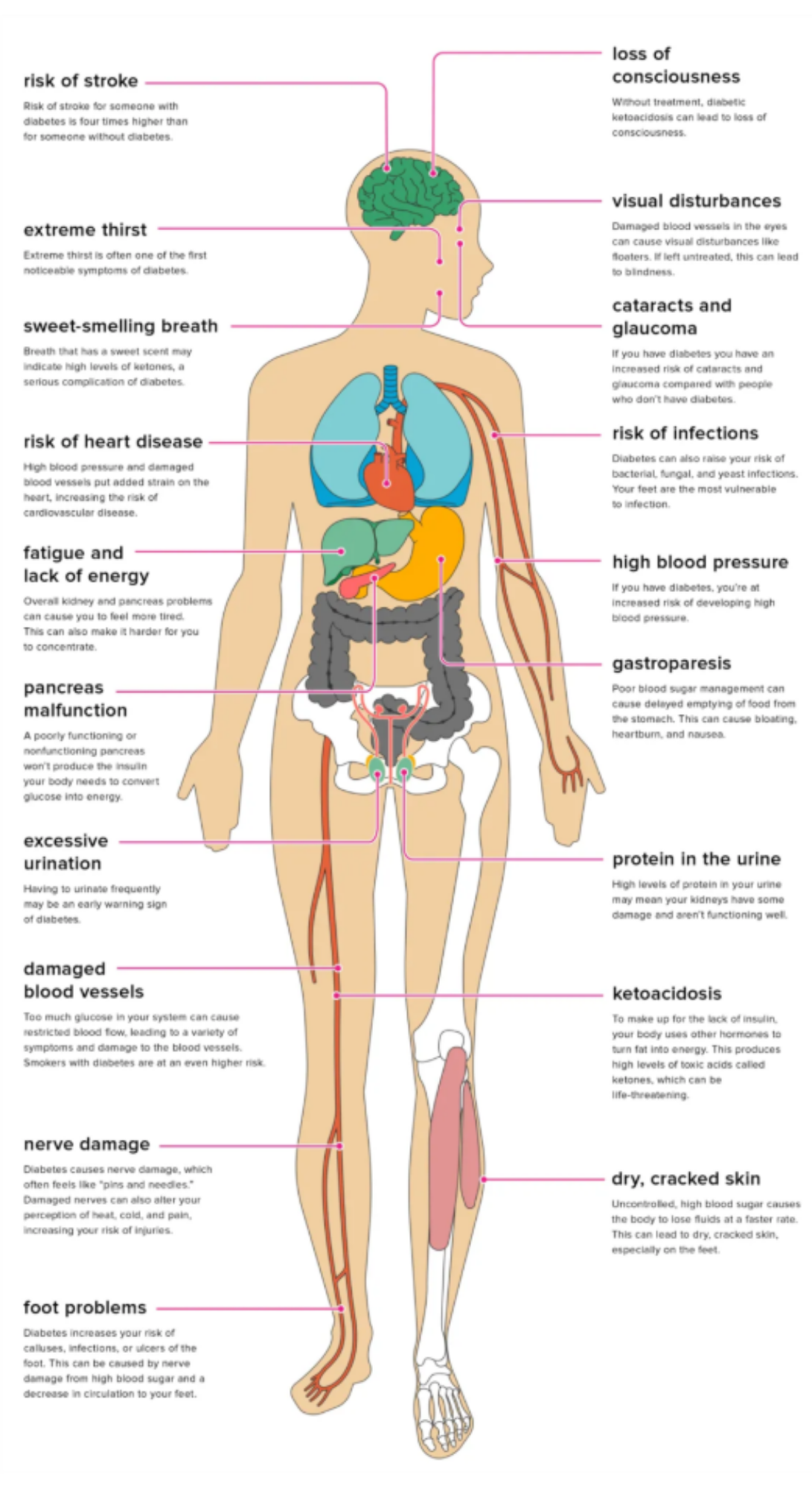
When the body doesn’t produce enough insulin, it can’t manage the amount of glucose (sugar) in the blood, which can cause a variety of dangerous health issues. Untreated diabetes can be deadly. There are currently no cures for diabetes, but there are many different ways to treat and maintain healthy blood sugars. Untreated high blood sugars can include eye disease (retinopathy, glaucoma, macular edema), heart disease (arrythmias, hypertension, hypercholesterolemia, arteriosclerosis), strokes, nerve damage (neuropathy), delayed wound healing, kidney disease, skin problems, peripheral vascular disease and infections.
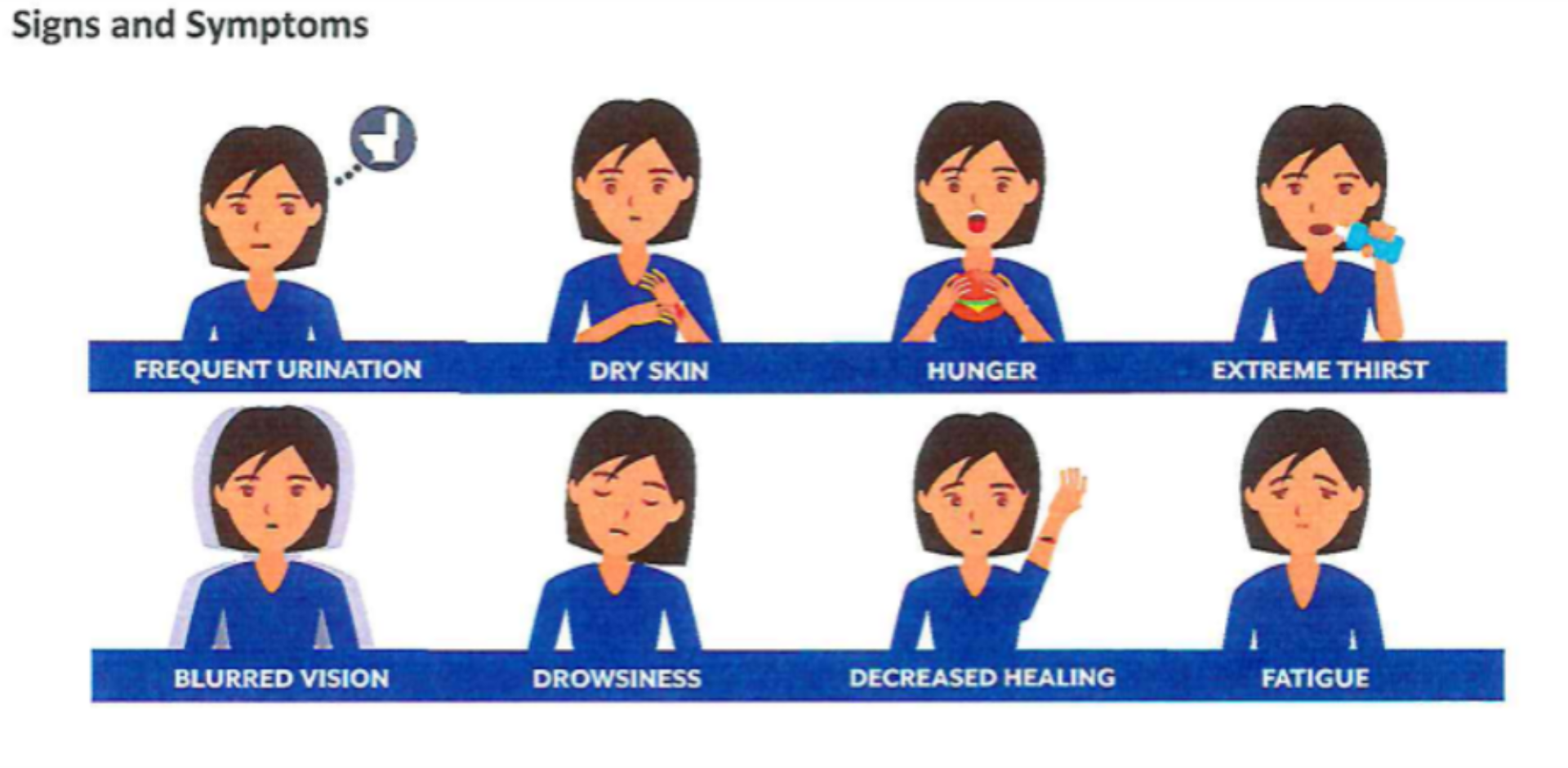
Know the Signs of Diabetes
Some people may not notice these symptoms right away or seek care until these symptoms have existed for quite some time. Detecting diabetes early can help the person get appropriate medical care and help them manage their blood sugar appropriately.
Managing diabetes can include dietary changes, increased activity, stress reduction, medications, and insulin.
Risk factors for developing diabetes
Risk factors for diabetes include excess weight, physical inactivity, unhealthy diet, stress, smoking, high blood pressure, high cholesterol, Polycystic Ovary Syndrome (PCOS), Non-Alcoholic Fatty Liver disease, and family history of diabetes.
Diabetes treatment has expanded in recent years with the development of Continuous Glucose Monitors (CGMs), Insulin Pumps, newer medications targeting weight loss, medications decreasing blood glucose through expulsion through the kidneys, and medications limiting/delaying glucose absorption.
If you have more questions about diabetes or would like further education, please reach out to your primary care provider and request a referral to the Sky Lakes Nutrition and Diabetes Clinic.
The phone number for the Sky Lakes Nutrition and Diabetes Clinic is 541-274-2633.
Heather Mitchell, RN
Author
April 16, 2026
Chronic Conditions | Diabetes Prevention | Diet | Education | Public Health
 [gtranslate]