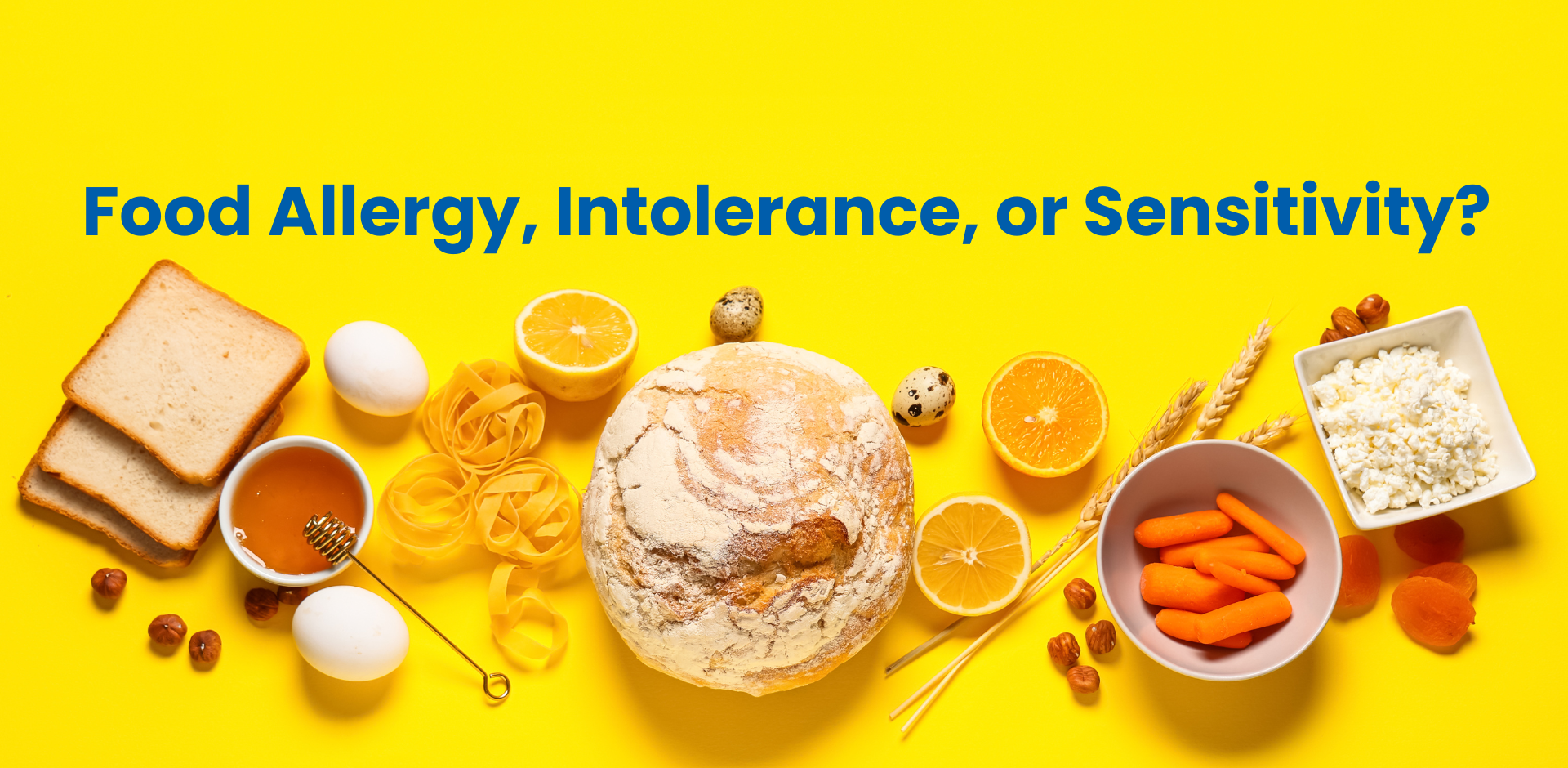
Food Allergy, Intolerance, or Sensitivity: What’s the Difference?
Getting stomachaches after eating cheese, gluten, or other foods? Here’s how to tell a true food allergy from an intolerance or sensitivity, and why it matters.
Allergies, Intolerances, and Sensitivity Are Not the Same Thing
“We would put [troublesome foods] into three different categories: a food allergy, a food intolerance, and a food sensitivity,” says Jennifer Newton, a nutrition coordinator at Sky Lakes Wellness Center. “Those are all three distinct things.”
You’ve probably heard people say they’re “allergic” to gluten, dairy, or certain spices. But more often than not, what they’re actually dealing with is an intolerance or sensitivity, and not a true allergy. The difference matters a lot, especially when it comes to your health and safety.
True food allergies affect about 1 in 13 children and roughly 1 in 10 adults in the United States. But many more people have intolerances or sensitivities and they often don’t realize it.
Food Allergies: A Real Immune Response
A food allergy is the most serious of the three. Your immune system mistakenly treats a food protein as a threat and fires back, sometimes with dangerous force.
“A food allergy can cause hives, swelling, difficulty breathing, anaphylactic shock, and low blood pressure,” Newton says. “And the almost scary thing about this is it can show up at any point in our life.”
The FDA recognizes nine major food allergens: milk, eggs, fish, shellfish, tree nuts, peanuts, wheat, soybeans, and sesame. For people with a true food allergy, the only reliable treatment is strict avoidance of the trigger food.
Celiac disease is sometimes lumped in with food allergies, but it’s actually an autoimmune disorder. It still requires lifelong avoidance of gluten.
Food Intolerances: A Digestion Problem
Unlike allergies, food intolerances don’t involve your immune system. Instead, your body has trouble breaking down a certain food, often because you’re missing an enzyme you need.
The most common example is lactose intolerance. Your body doesn’t produce enough lactase, the enzyme that digests the sugar in milk, so you end up with bloating, gas, diarrhea, or headaches after eating dairy. Newton points out an interesting fact: research shows only about 35% of people worldwide can digest lactose past the age of seven.
Intolerances can also be dose-dependent. “I can have a glass of milk and not have a problem,” Newton explains, “but when I have a glass of milk and some cheese and then ice cream, that’s when I start having symptoms.”
This can make it tricky to identify your triggers. Symptoms usually show up an hour or two after eating, not immediately.
Food Sensitivities: The Middle Ground
Food sensitivities fall somewhere between allergies and intolerances. They may involve some immune activity, but they’re not the same as a true allergy. Gluten sensitivity, when someone reacts to gluten without having celiac disease, is a common example.
“Food sensitivities and food intolerances are more common, especially in adults,” Newton notes.
How Do You Figure Out What You Have?
Diagnosis often starts with keeping a detailed food and symptom log. From there, your doctor or dietitian may recommend:
Skin prick testing (often used when a true food allergy is suspected)
A breath test (commonly used for lactose intolerance)
An elimination diet, where you cut out suspect foods for up to eight weeks, then reintroduce them one at a time to look for reactions
Newton warns that elimination diets should be done with professional guidance, especially if a true allergy — particularly one that’s ever affected your breathing — is suspected.
When to Get Help Right Away
“If you’re having difficulty breathing, or any swelling of the face or lips, you want to get seen right away,” Newton advises. Low blood pressure, a rapid heart rate, and hives that won’t let up are also red flags. These are signs of a potentially life-threatening allergic reaction, and 911 should be your first call.
Read Your Labels
U.S. law requires that all nine major allergens be listed on packaged food labels. But Newton says it’s worth going further and learning the other names an ingredient might hide under. Egg, for example, can appear as albumin or in ingredients like mayonnaise. When in doubt, read carefully, and if you’re very sensitive, check for cross-contamination warnings too.
If you’re unsure what’s behind your symptoms, talk to your doctor or a registered dietitian. Knowing what’s causing your gut distress could make a big difference in how you feel every day.
Jen Newton is the Registered Dietitian and Certified Diabetes Educator for the Sky Lakes Wellness Center. Trained by Dr. Harlan at Tulane School of Medicine Teaching Kitchen in New Orleans.
 [gtranslate]