Falling is one of the biggest fears in physical therapy. A confidence-building system called Solo-Step helps patients push past that fear so they can relearn how to walk.
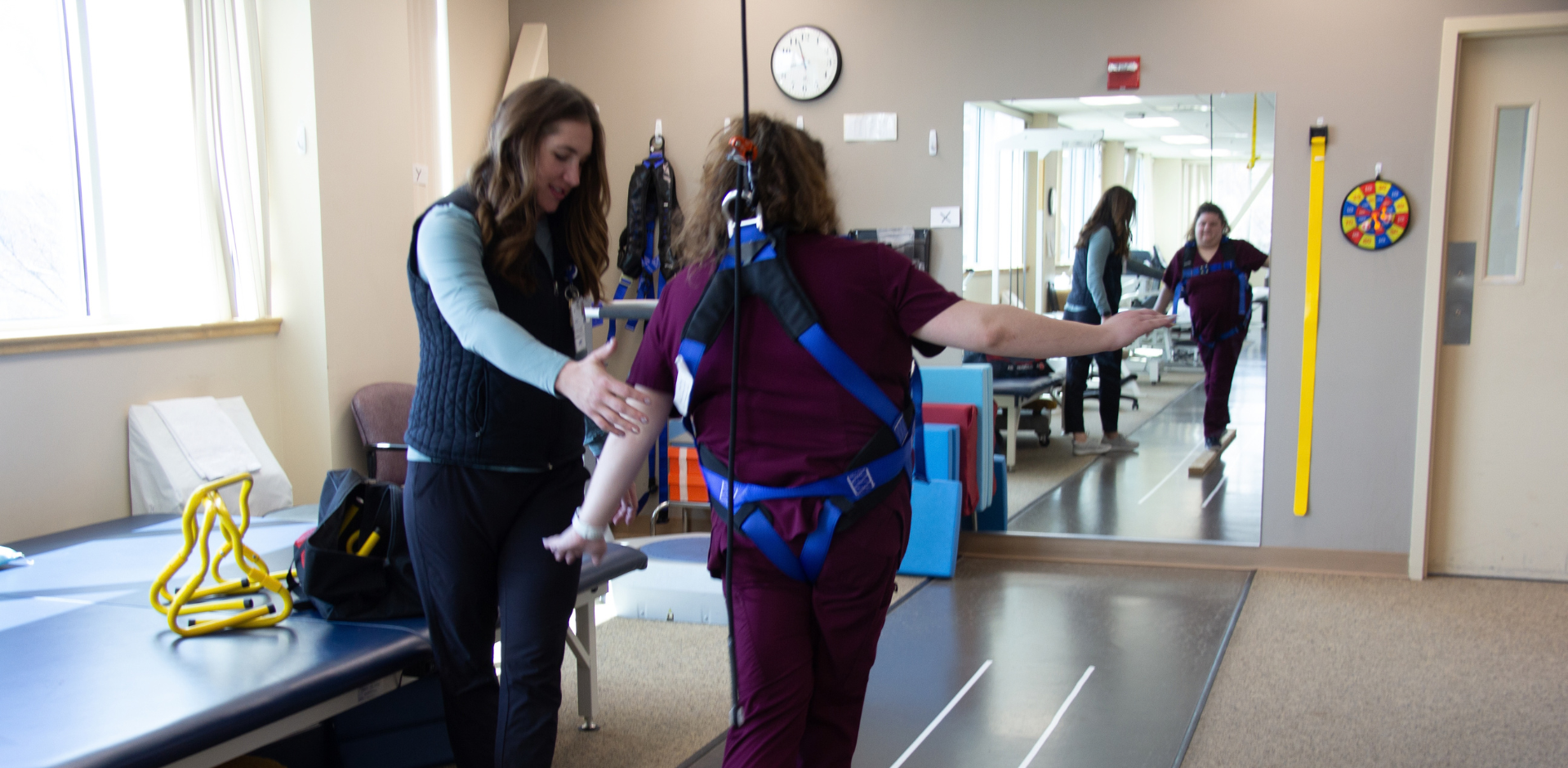
Physical therapist Alek Angeli, PT, DPT, CCVT, uses Solo-Step with patients recovering from a multitude of conditions that affect balance. The system involves a harness that hangs from a track built into the ceiling. It holds up to 500 pounds, and the harness comes in different sizes to fit each patient.
“It’s not eliminating gravity or taking away weight,” Angeli says. “It’s designed to keep people from falling to the ground or off of certain surfaces we train on.”
Fear Slows Recovery Down
Constant worry about falling can be as limiting as the physical injury itself. More than one in four adults over 65 falls each year, and the fear that follows leads them to move less, weakening their muscles and raising their fall risk.
Angeli sees this fear every day. “There’s a huge mental aspect of fear that comes with balance issues,” he says. “The idea behind Solo-Step is that you get some literal comfort, plus the knowledge that even if you lose your balance, you’re always going to stay upright.”
Harness-supported gait training can give patients the confidence to start moving again soon after a stroke or injury. That safety net lets Angeli push patients past what they think they can do.
Who Benefits Most
Angeli finds Solo-Step especially helpful for patients with stroke, Parkinson’s disease, or paralysis, though almost any patient can use it, including people recovering from amputations or joint replacements. “It doesn’t have to be just neurologic,” he says. “That tool can teach them it’s safe to bear weight again.”
For patients with Parkinson’s disease, the harness helps them relearn what a normal-sized step feels like, since the condition often shrinks and disorganizes movement. For stroke patients, Angeli can use the harness to support a patient’s weight while he works directly with a weak leg — something that used to take three or four helpers to do safely.
A Bigger Track Is on the Way
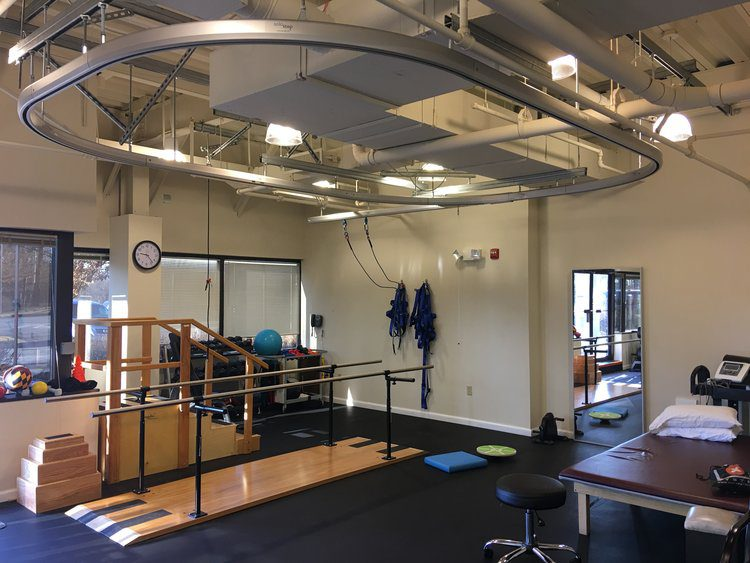
Sky Lakes’ track runs about 20 feet, so patients must stop and turn around often. Angeli says the system moving into the hospital’s new building will be a continuous oval, giving patients room to walk longer distances without breaking their rhythm.
Example of an oval solo-step ceiling mounted track.
A Patient Learns to Run Again
Angeli has seen the harness change what patients believe is possible. One patient developed Guillain-Barré syndrome and went from healthy to almost fully paralyzed within two weeks. By the time she reached outpatient therapy, she could sit upright in a wheelchair, but she had no movement. “She had a severe fear of falling because she had no feeling in her legs,” Angeli says.
Over months of therapy, she built enough strength to stand, and Angeli used Solo-Step to help her bear weight while she practiced standing and, eventually, walking.
After eight months of rehab, the patient worried whether she could run if she ever needed to get out of danger fast, so Angeli strapped her into the harness for a few 30-second running intervals to help her trust her legs again. Once she felt ready, they took the harness off, and she ran on her own.
Stories like hers show the life-changing effect this harness can have. It gives patients a safe place to test their limits, so they can walk out of the clinic trusting their own two feet.
 [gtranslate]