[gtranslate]



A Train Derails. Now What?
Imagine a train derails near Klamath Falls and spills hazardous chemicals. Who responds? Everyone — 911 dispatch, law enforcement, fire, EMS, and the hospital.
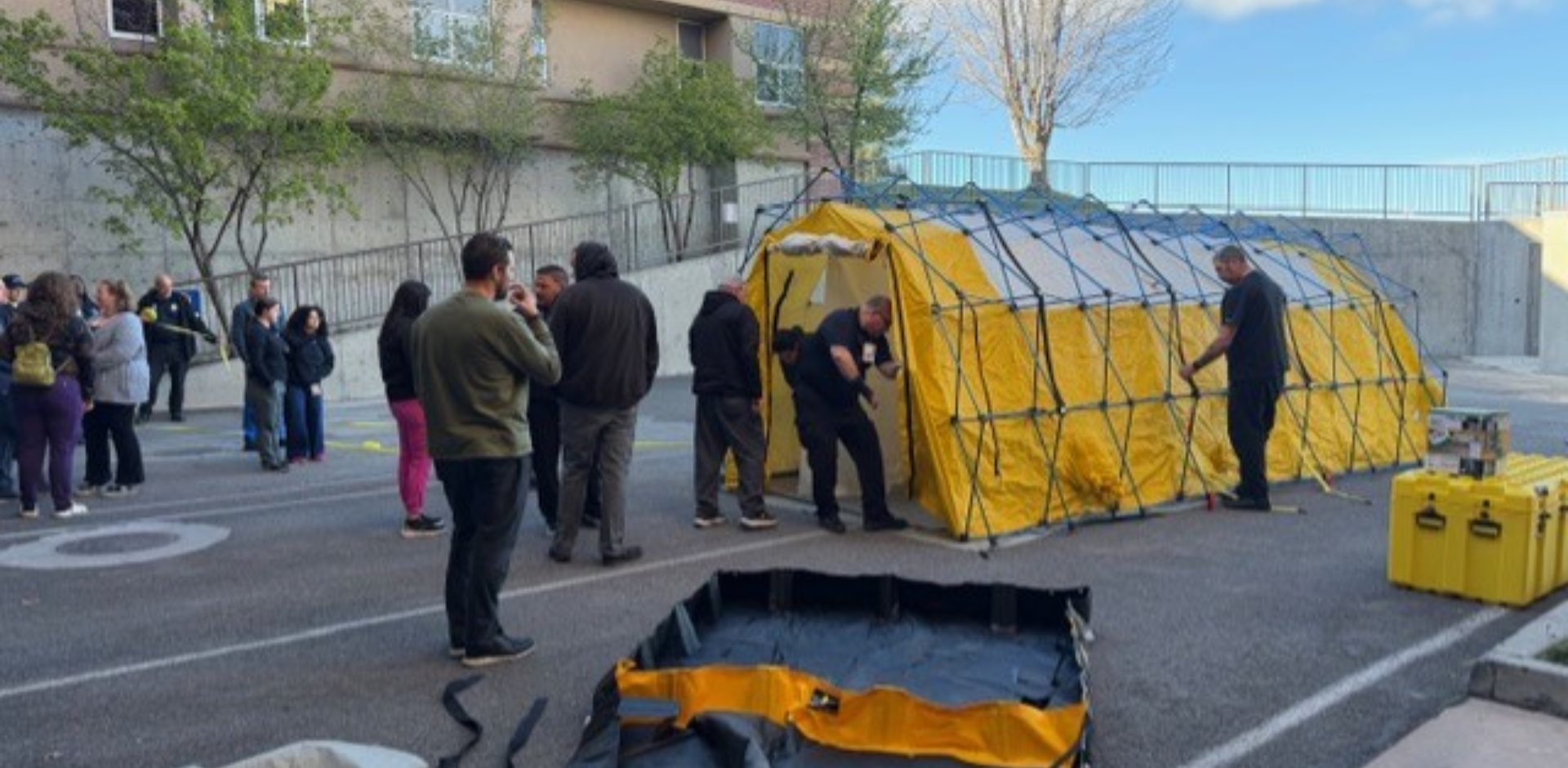
Sky Lakes Medical Center recently played its part in a community-wide exercise just like that scenario, hosted by the Oregon State Fire Marshal’s Office.
Kattaryna Stiles, a regional emergency coordinator from the Oregon Health Authority (OHA), observed and was impressed enough to send Sky Lakes a formal letter of recognition for our outstanding work. She praised the team’s high level of training, coordination, and staff engagement, and called out their approach as a model for other hospitals across the region.
“I always brag that I feel like I have the very best team ever,” said Stacey Holmes, RN, Sky Lakes’ director of emergency and trauma services. “So I’m never surprised when they’re great, because they really do good things.”
18 Months of Hard Work
Over the last 18 months, Dennis Davenport, director of safety and security, and Jennifer Shae, manager of safety and security, have worked to update and reorganize all of Sky Lakes’ hazardous material decontamination supplies and equipment. They also brought in a new single-patient decontamination tent that can be set up in minutes.
Mark Shae, an ED tech II in the Emergency Department, also brought years of prehospital EMS and fire service experience. Firefighters train extensively in hazardous materials management, and he put that knowledge to work at Sky Lakes.
“Because of Mark’s training in that arena, he’s been able to bring his expertise to us,” Holmes said. “And because of that, he’s inspiring the rest of our staff.”
Stiles specifically recognized Mark for his leadership in training and implementation. Jennifer, Mark, and two other ED Techs also completed both Basic Disaster Life Support and Advanced Disaster Life Support courses, bringing new skills back to their teams.
The Two-Tent System: A Best Practice
One thing that stood out to state observers was Sky Lakes’ two-tent decontamination setup. Stiles called it a best practice for its efficiency and ability to reduce time to care.
Holmes describes the system as one tent that handles a patient who can walk in, shower off contaminants, and walk out. The second, larger tent can handle patients on gurneys and cycle multiple people through at once. Together, the two tents — along with a dedicated decontamination room — give the team more options, capacity, and flexibility.
That flexibility recently proved useful in real life. Since updating their equipment and training, Sky Lakes has responded to two actual hazmat incidents: one with a single patient, and one that required caring for 15 patients at once.
“The preparation and hands-on training greatly improved our team’s confidence and response capabilities during those events,” Holmes said.
What It Means for Our Community
If you live in the Klamath Basin, this kind of preparedness matters. The region has significant hazmat risks. Agriculture means pesticides and chemicals, and busy rail lines mean a derailment is possible.
Holmes wants the community to know they’re covered. “They can be confident in knowing that if something were to happen, we have a team committed to making sure they’re taken good care of,” she said. And Sky Lakes doesn’t train alone; the exercises include 911 dispatch, law enforcement, and all local EMS and fire agencies.
Next year, the team moves on to a full-scale exercise, complete with patient actors moving through the entire response system. The goal, as always, is to keep getting better.