Depression affects how you think, sleep, eat, and function. Most people improve with therapy or medication, but about 31% of people treated for depression don’t respond well enough to standard antidepressants. That’s called treatment-resistant depression (TRD), and it comes with real risks, such as greater disability, more ER visits, and a higher chance of suicide.
What Is Treatment-Resistant Depression?
Yetunde Akins, MD, DFAPA, a psychiatrist at Sky Lakes Medical Center, explains that TRD means your depression hasn’t improved after trying at least two antidepressants at the right dose for four to six weeks each. Dose and duration matter because a medication taken at too low a dose, or not long enough, may not have had a real chance to work. Genetics, misdiagnosis, unaddressed trauma, and differences in brain wiring can all explain why standard medications fall short for some people.
“Depression is not a one-size-fits-all,” says Akins. “In some cases, different brain pathways are involved, and that’s why we are hearing more recently about more advanced or targeted treatments.”
TRD is not a personal failure; it’s a biological illness that sometimes needs more than one approach, just like high blood pressure sometimes needs more than one medication.
Esketamine: Fast-Acting and FDA-Approved
Esketamine (brand name Spravato) is an FDA-approved nasal spray for adults with TRD. Akins says that instead of targeting serotonin like most antidepressants, it works on glutamate, a brain chemical that helps form new mood-supporting connections. It can work within hours or days rather than weeks, and it’s one of the only approved treatments that also addresses acute suicidal thoughts.
You may associate ketamine with recreational use, but Akins emphasizes that Spravato is a different form, delivered as a nasal spray in a supervised clinical setting, not by IV. At Sky Lakes, patients relax in a private bay with music and their own personal device while staff monitor vitals for about two hours. Side effects like mild sedation or a brief dissociative feeling are possible, which is why you’ll need a driver from your appointment. Many patients report mood improvement, reduced anxiety, and fewer chronic suicidal thoughts.
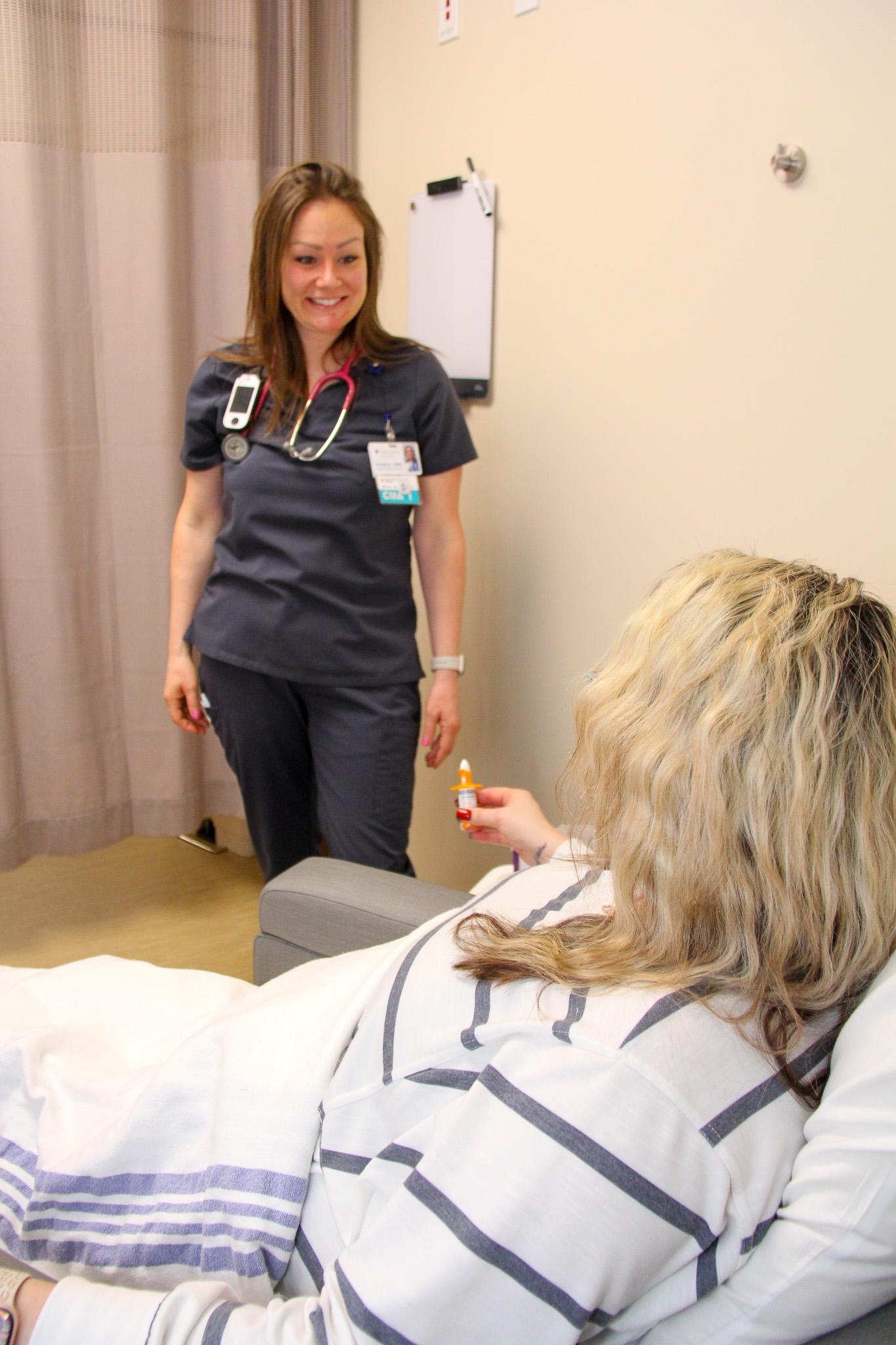
Certified medical assistant talks to patient before Esketamine treatment.
TMS: Waking Up the Brain Without Medication
Transcranial magnetic stimulation (TMS) uses gentle magnetic pulses to stimulate mood-regulating areas of the brain. It’s non-invasive, requires no anesthesia, and takes about 20 minutes per session.
“Patients are awake, talking, and can drive themselves home afterward,” Akins says. “It is not shock therapy.”
TMS is FDA-cleared and has shown lasting results. Some studies show effects lasting up to a year without continuous treatment. It typically requires sessions five days a week for several weeks, which can be a barrier for people with limited transportation.
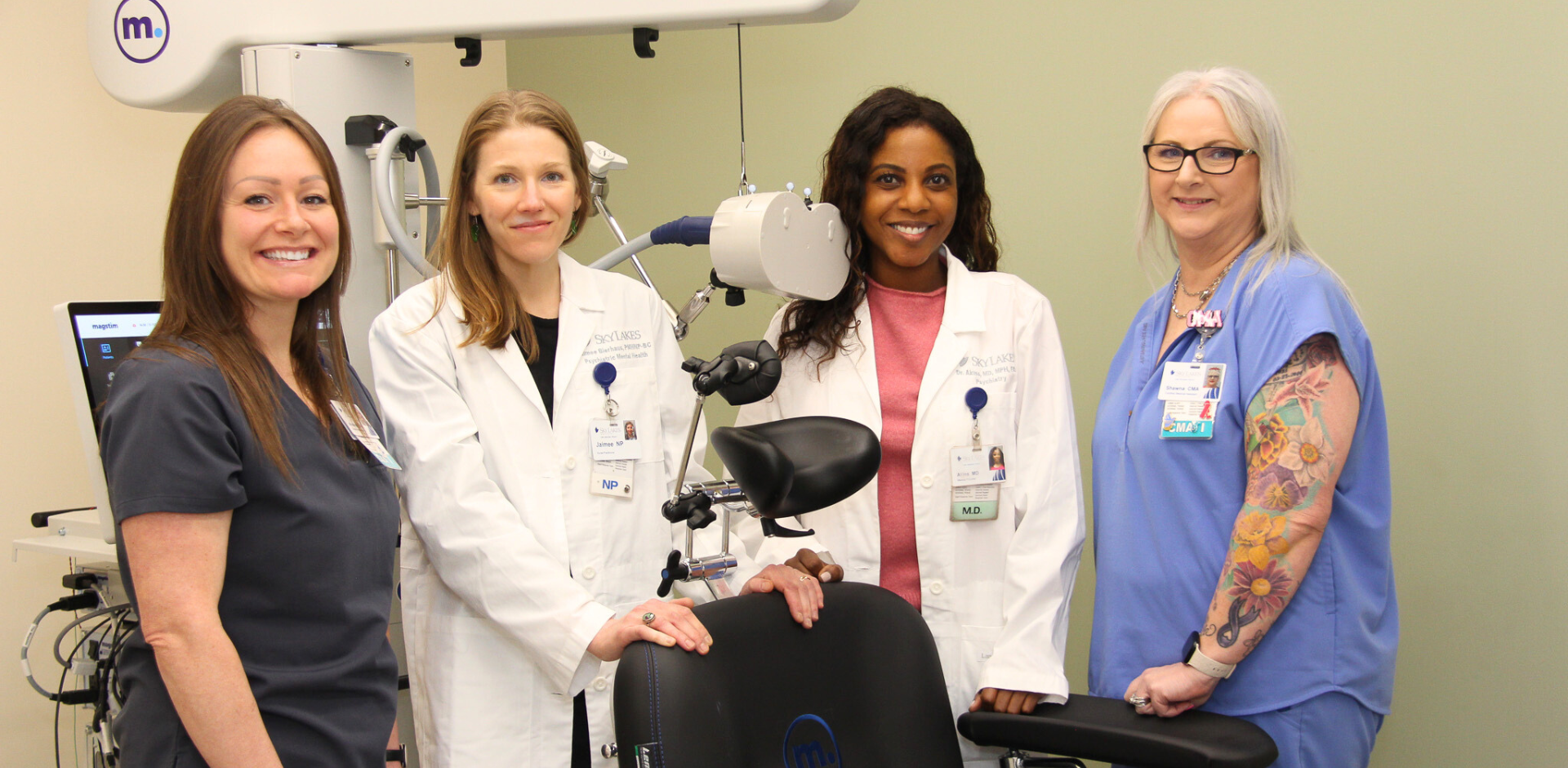
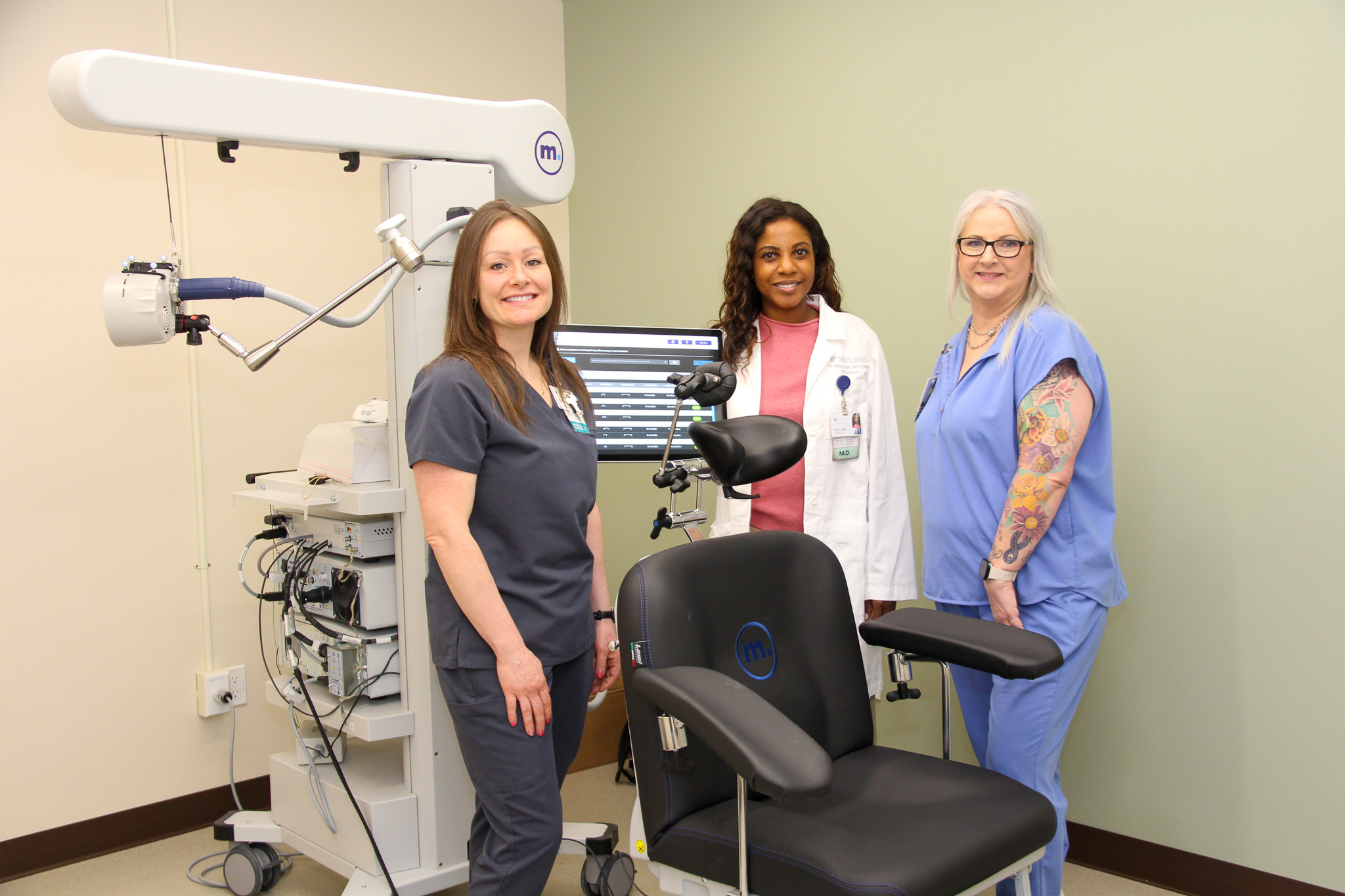
Dr. Akins and Sky Lakes Psychiatry and Mental Health Clinic employees with their Transcranial magnetic stimulation (TMS) machine.
Which Treatment Is Right for You?
The decision depends on urgency, health history, and personal preference. Esketamine is better suited for people in crisis or with active suicidal thoughts, because of its faster effect. TMS may be a better fit if you prefer no internal medication, have high blood pressure, or need a shorter daily commitment. Akins is excited that both are now available at Sky Lakes.
“Recovery is possible even for people who feel like they have run out of options,” Akins says. “Not responding does not mean that it’s hopeless. It just means that we need a different strategy.”
If you or someone you love has struggled with depression that hasn’t responded to treatment, talk to your doctor or reach out to a psychiatrist. One of these options might work for you.
 [gtranslate]